
The REPS driver journey: how to drive over our system?
With REPS, nothing changes in the way you drive.
Our system is installed in natural braking zones and it harvests only the energy that would normally be lost during deceleration.
There is no extra fuel use, no added effort and the system works perfectly at normal speeds under 50 km/h.
Just drive as you always do: REPS does the rest.

At the start of your journey
No app, no screen, no new system.
Just get in your truck and drive as you always do. Your routine doesn’t change.
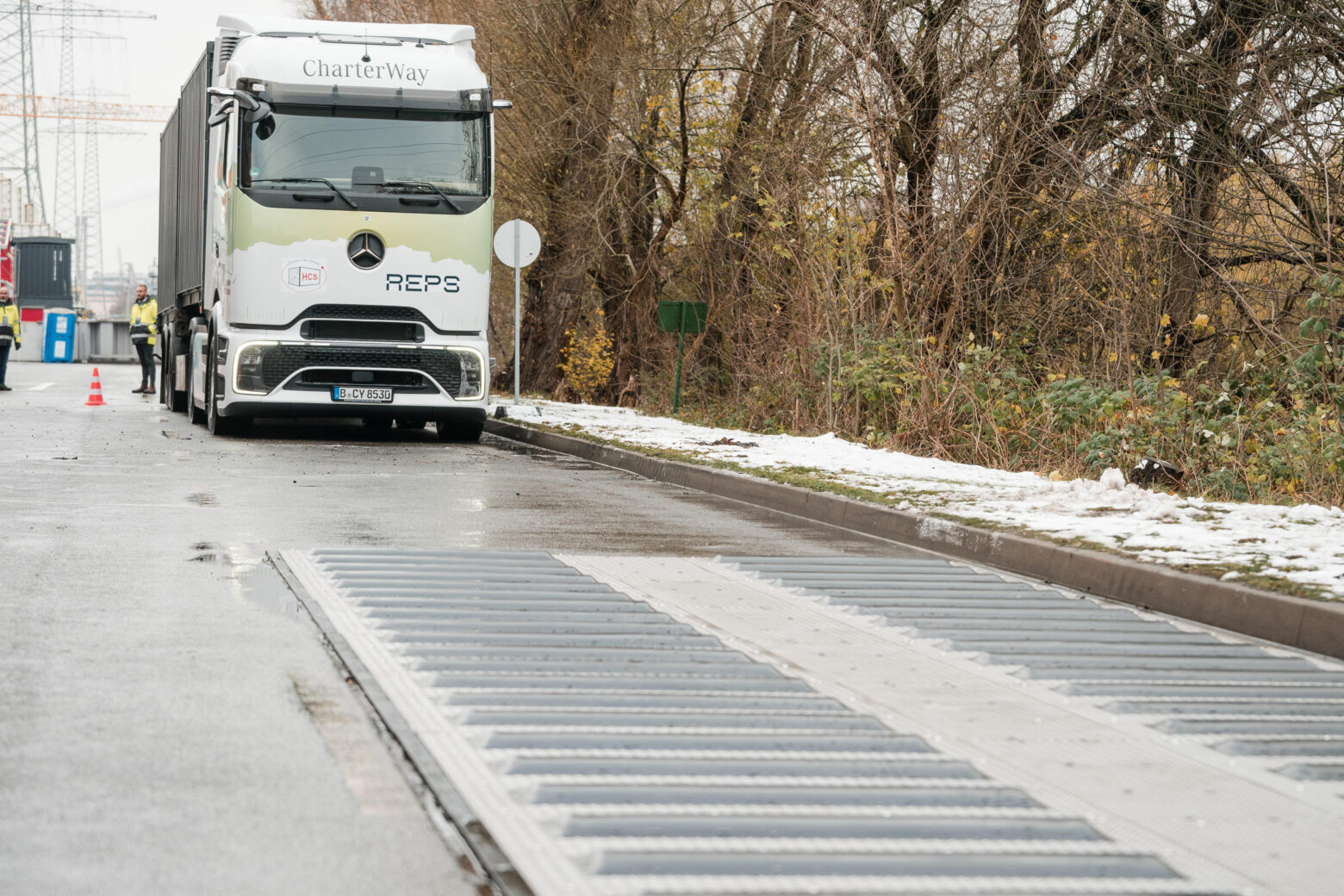
As you approach the zone
You simply enter a natural braking zone where your speed naturally decreases. No need to change your driving behavior.
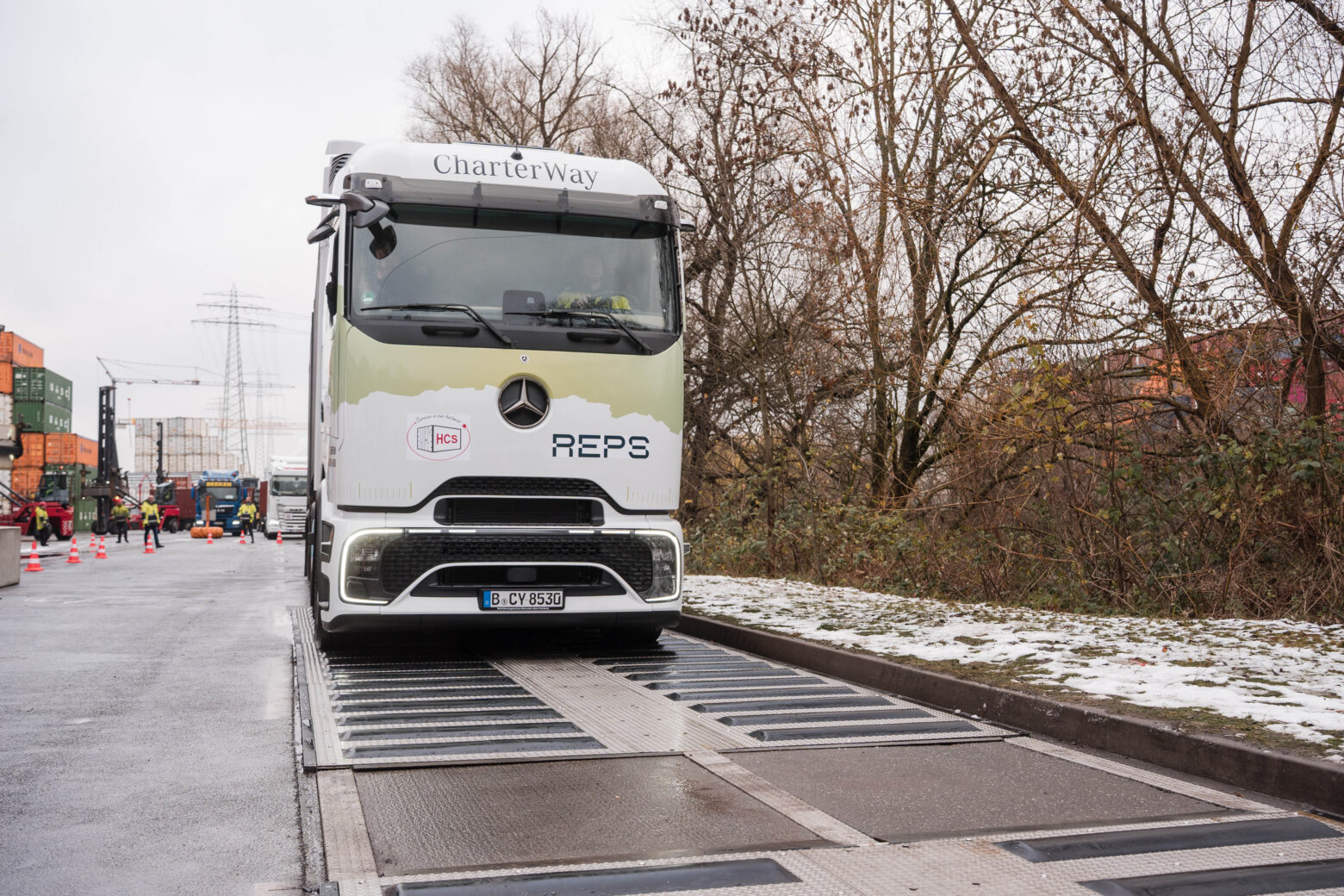
Drive over the REPS System
Continue straight over the REPS surface at speed below 50 km/h.
The system captures lost energy without affecting your truck’s engine or fuel consumption.

Inside your vehicle
The system safely compress under the vehicle’s weight, converting lost energy into usable power, without you feeling anything in the cabin.
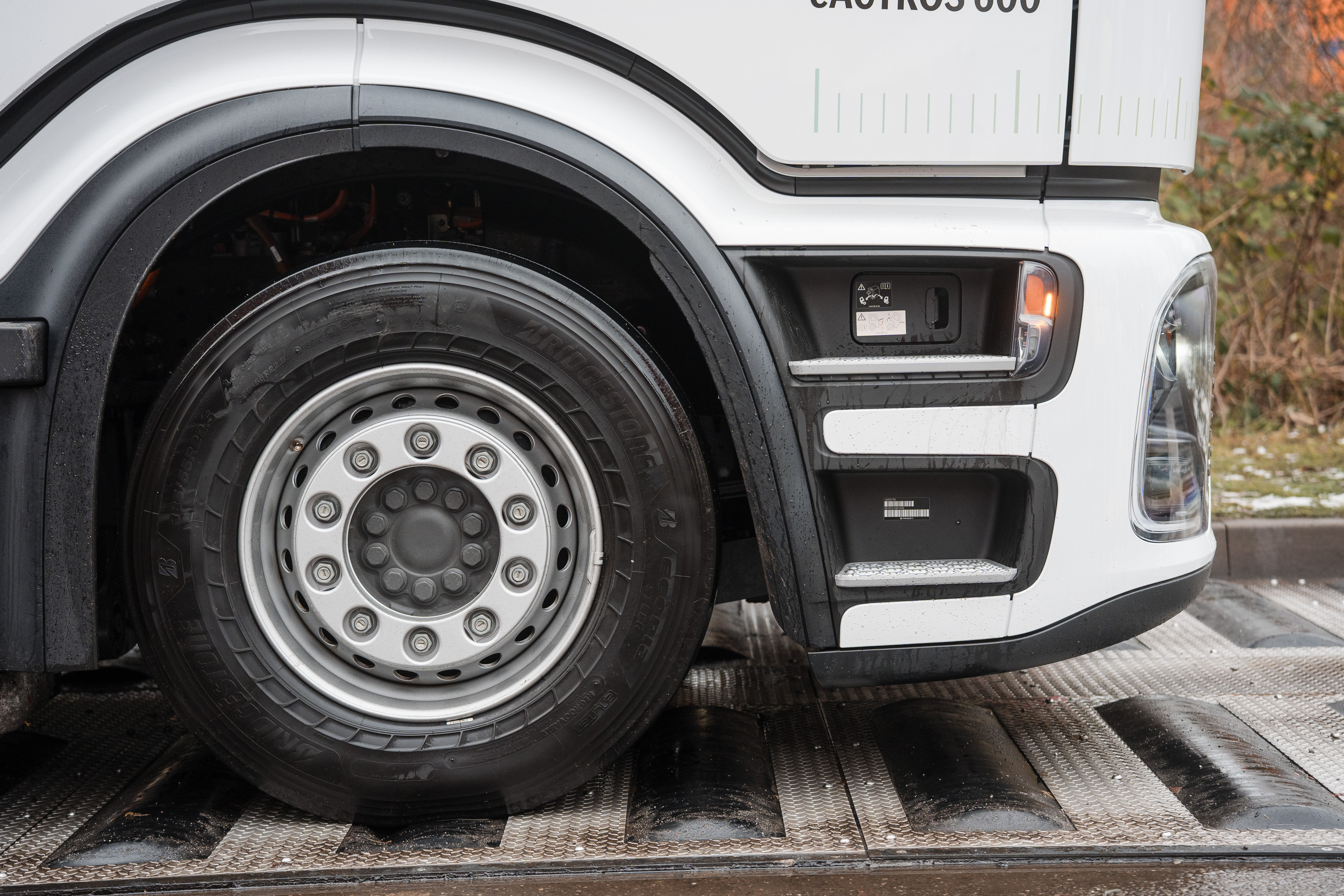
Continue Your Route Normally
You keep driving as usual. No stops, no waiting, no additional procedure.
Creating Sustainable Energy, Long Term
Be part of the innovation. You keep driving as usual: we turn it into clean energy.
“Make an impact by simply driving”
Benefits for drivers
DRIVE INNOVATION
Join a growing network of drivers making roads more sustainable: without changing how you drive.
NO EXTRA FUEL CONSUMPTION
Our REPS system only captures energy that’s already lost during braking and movement. Your vehicle’s fuel consumption stays the same.
SAFE AND SEAMLESS
The REPS system is installed in areas where you naturally slow down, making it completely safe and unobtrusive.
Quick Video Tips for Road Users
Click on the trucks to learn more
What kind of installation is the REPS road power plant and where is it placed?
Is the REPS road power plant stealing energy from the trucks?
As a driver, do I have to drive slowly over the system?
As a driver, do I need to adjust when there is ice, snow or rain?
What are the top 3 rules for a driver when driving over the road power plant?
What happens to the energy after the system captures it, and how is it put to use?
How much energy does the REPS road power plant can produce?
FAQ Section
Click on the trucks to learn more
Braking zones alone are not a reliable indicator. They are rare, and even when they exist, braking behavior varies widely from one driver to another. Some brake lightly, others more strongly, and many slow down simply by lifting off the accelerator.
That’s why we don’t rely on individual braking intensity. Instead, we focus on locations where vehicles naturally and consistently slow down, regardless of driving style. Such as specific road geometries or traffic patterns. This ensures the system works fairly, without penalizing anticipatory or energy-efficient driving.
No. The system is designed to avoid increasing fuel consumption, even in congested traffic. It is not intended to function like speed bumps or rigid thresholds that force vehicles to stop and restart.
REPS is installed in areas where vehicles naturally slow down or move progressively, including zones with regulated traffic flow. In traffic jams, trucks already alternate between stopping and moving; the system does not introduce additional acceleration or braking beyond what would normally occur.
Because no extra force is required to cross the system, drivers do not need to burn additional diesel to restart. As a result, fuel consumption remains unchanged compared to a standard road surface.
The system is designed with safety as a priority, especially in winter conditions. Unlike speed bumps or solutions that rely on sudden braking, it does not require abrupt deceleration or aggressive driver input.
It is installed in areas where vehicles naturally slow down, ensuring smooth, controlled speed reduction. By avoiding forced braking or sharp thresholds, the system minimizes the risk of wheel slip and maintains traction, even on wet or icy roads.
In essence, our system can be categorized into three main steps: a mechanical, a hydraulic and an energy part.
Reason why we set it up that way: The most critical elements are in the module-box next to the road, so they do not face the vehicle’s heavy loads. As the converter is based on a permanent magnetic bearing (the world’s first) it faces no friction, resulting in an extremely long lifespan.
From a physics standpoint, the system does not capture “braking energy,” “movement energy,” or energy created by a vehicle’s weight. These terms are often used for simplicity but are not physically precise.
In reality, the system recovers a portion of the energy that would normally be lost when a vehicle slows down. When a vehicle naturally decelerates, whether through braking or easing off the accelerator, part of this energy is usually dissipated as heat through friction. The system captures some of that lost energy without requiring any extra effort from the driver.
The vehicle’s weight alone does not generate energy; it only influences how much energy is lost during deceleration. Likewise, the system does not create energy: it simply recovers energy that would otherwise be wasted.
The system does not force trucks to expend extra energy beyond what they naturally lose while slowing down. Energy is recovered only from energy that would otherwise be lost during deceleration.
Unlike systems that rely on rigid speed bumps or thresholds, the REPS plates are flat when vehicles are rolling normally. Trucks do not need to accelerate more than usual, and no additional diesel is consumed to cross the system. The recovered energy is simply captured from normal braking and deceleration patterns, without creating extra fuel consumption or penalizing drivers.
This approach ensures the system is environmentally efficient while remaining safe and seamless for drivers. Trucks maintain their normal driving behavior, and the energy recovered is genuinely sustainable rather than “taken” from the vehicle.
REPS does not generate energy by making trucks work harder or burn more fuel. Instead, it captures energy that would normally be lost during deceleration, braking, or natural slowing down. This recovered energy can then be used for electricity or other purposes, without increasing fuel consumption.
Because no additional fuel is burned to operate the system, it does not add CO₂ emissions from the vehicle itself. In other words, the system reclaims energy that would otherwise be wasted, making it a sustainable, low-impact source of electricity, even when the original energy comes from combustion engines.
The system is designed to capture energy that would otherwise be lost, without requiring trucks to use additional fuel. Minor adjustments, such as driving slightly over the plates, result in negligible extra energy consumption compared to the energy recovered.
However, it’s important to consider the environmental impact of the plates themselves. Manufacturing, transporting, and installing large steel plates does have a footprint. While these factors exist, the system is designed to maximize efficiency, and the energy recovered during normal driving helps offset these impacts over time.
Overall, the plates provide a net environmental benefit, capturing energy that would otherwise be wasted, while keeping fuel consumption for trucks effectively unchanged.
The energy converter is based on a permanent magnetic barring (repelling magnets) which creates changes in the magnetic field and induces voltage in the surrounding coils.
A question? Need more information?